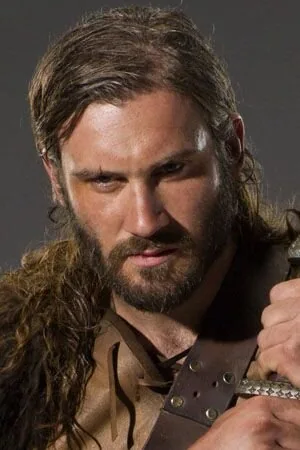
Who plays Rollo in Vikings?
Rollo is played by Clive Standen in the original Vikings series.
Explore family, allies and rivals or follow the story sections below.
Cast references: Clive Standen.
Explore Rollo’s story
Brotherhood under pressure
Affection and rivalry coexist from the opening episodes. His choices repeatedly force Ragnar to weigh family loyalty against the safety of his followers.
A new identity in Frankia
Marriage to Gisla and his position in Normandy give him a political future independent of Ragnar. Defending Paris makes the brothers’ conflict a clash between armies.
The problem with a loyalty score
A relationship map should track what an alliance protects at a particular moment. Calling Rollo simply loyal or disloyal cannot explain why defending his new home is experienced elsewhere as betrayal. His official biography identifies both the brother and the defender of France; the dramatic difficulty is that he cannot always fulfill those roles together.
Bjorn’s contested parentage
Rollo later says he is Bjorn’s father. Bjorn rejects his claim and identifies Ragnar as his father. The claim should be recorded as disputed biological parentage, not a settled family-tree fact.
Why he returns after becoming a duke
In his Rotten Tomatoes interview, Clive Standen describes Rollo’s return as a collision between responsibility to his new people and unfinished family wounds. The political bargain is real, but it does not exhaust the motive. Normandy has given him status without making his earlier relationships disappear. This is a useful distinction when reading apparent betrayal: Rollo can be acting strategically for one community while causing a personal catastrophe in another. His new identity does not cancel the old one; the two identities make incompatible demands.
What the creator actually says about paternity
TV Guide’s account of “The Revelation” (5.11) contains a firmer-sounding introduction than the creator comments inside it. Hirst describes Lagertha as uncertain because she had been involved with both brothers. Standen’s conviction belongs to Rollo’s perspective. Those are not interchangeable claims. The careful reading is that Rollo asserts fatherhood, Lagertha cannot supply certainty, and Bjorn rejects the claim’s authority over his identity. A family tree should preserve that distinction instead of converting a provocative headline into an established biological fact.
Recognition is the unresolved hunger
Rollo wants more than survival or a title: he wants the people whose judgment formed him to acknowledge what he has become. That desire helps explain why a man with a kingdom’s resources still needs an answer from a former household. Money and protection cannot purchase the family response he wants. On a rewatch, compare what he can command as a ruler with what he cannot compel in conversation. The difference keeps his strength and vulnerability present in the same scene.
Relationships & loyalties

Episode-by-episode evolution
The turning points in Rollo’s story, from the earliest chapter onward.
- Season 1 · Episode 09
All Change
Rollo sides with Borg.
Read the episode guide - Season 2 · Episode 01
Brother's War
Rollo surrenders rather than fight Ragnar.
Read the episode guide - Season 3 · Episode 10
The Dead
Rollo stays behind and is offered land, status and marriage; Ragnar confronts Floki's responsibility for Athelstan's death.
Read the episode guide - Season 4 · Episode 01
A Good Treason
Kalf shares the earldom with Lagertha and violently eliminates opponents of the arrangement. In Francia, Rollo marries Gisla and has the Viking camp outside Paris destroyed.
Read the episode guide - Season 4 · Episode 10
The Last Ship
Rollo’s force defeats the Vikings despite their initial success against a first group of ships. Ragnar and Rollo fight; wounded companions are taken back as the Vikings retreat. Francia celebrates Rollo.
Read the episode guide - Season 5 · Episode 11
The Revelation
Rollo’s offer combines family connection with the leverage of a ruler negotiating from a position of strength.
Read the episode guide
Memorable scenes & lines
The brothers fight on the river
Season 4, episode 10
The Frankish counterattack brings Ragnar and Rollo into direct combat. The Vikings retreat and Rollo returns to public acclaim in Francia. The sequence turns a private rivalry into conflicting ideas of home, duty and recognition.
Why this moment matters
The battle turns the wish to escape a brother’s shadow into a duty to stop that brother’s army. Francia’s public acclaim gives Rollo the recognition he has wanted, but the cheering is inseparable from the defeat of people he once called his own. The scene makes achievement and betrayal descriptions of the same event rather than mutually exclusive verdicts.
Paying to rejoin the voyage
Season 4, episode 13
Rollo makes passage conditional on accompanying Bjorn’s expedition. Once aboard, he is dragged beneath the ship before being allowed to continue. His new power secures an agreement but does not buy forgiveness from the people he previously opposed.
Why this moment matters
Rollo can negotiate entry through his title, yet the men on the ship retain a different account of what he owes them. Dragging him beneath the hull turns that account into a bodily ordeal. His return to adventure therefore begins with neither easy forgiveness nor a complete break; the group permits his presence while making the old injury visible.
“I will not betray my wife.”
Why fans keep talking
Rollo’s search for recognition makes his rise in Francia understandable, particularly when his earlier place seems permanently secondary to Ragnar. That understanding does not explain away the people killed along the route. The river victory is powerful precisely because a satisfying personal arrival is also a communal defeat. His later voyage preserves that tension through humor and punishment. Arguments about whether Ragnar held him back or repeatedly spared him are really arguments about what family owes ambition, and what ambition is entitled to demand from family.
What resonates
The struggle to escape a famous brother’s shadow makes his ambition recognizable. His life in Francia creates a compelling tension between belonging and adventure.
What divides viewers
Betrayal, killing his own people and sexual violence are decisive objections for viewers who reject ambition as an excuse.
Character gallery
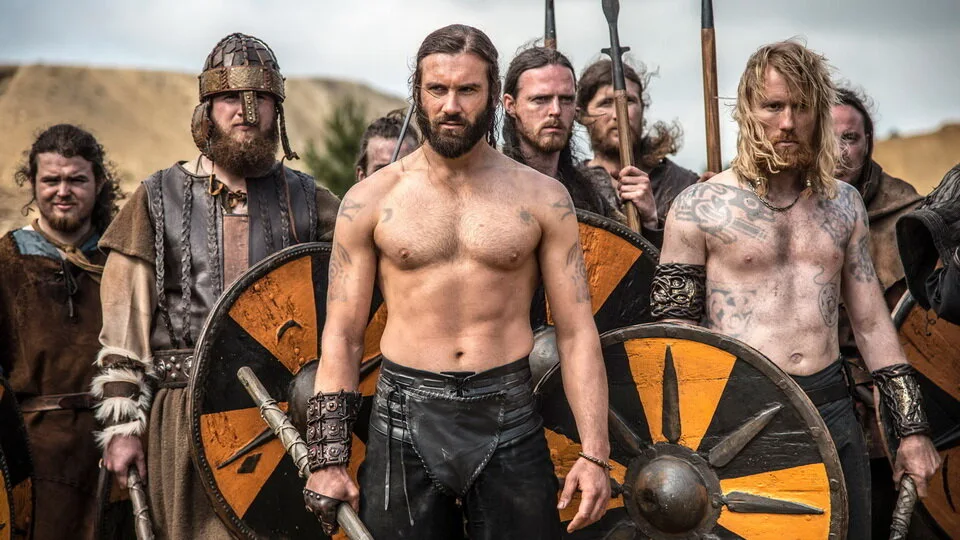
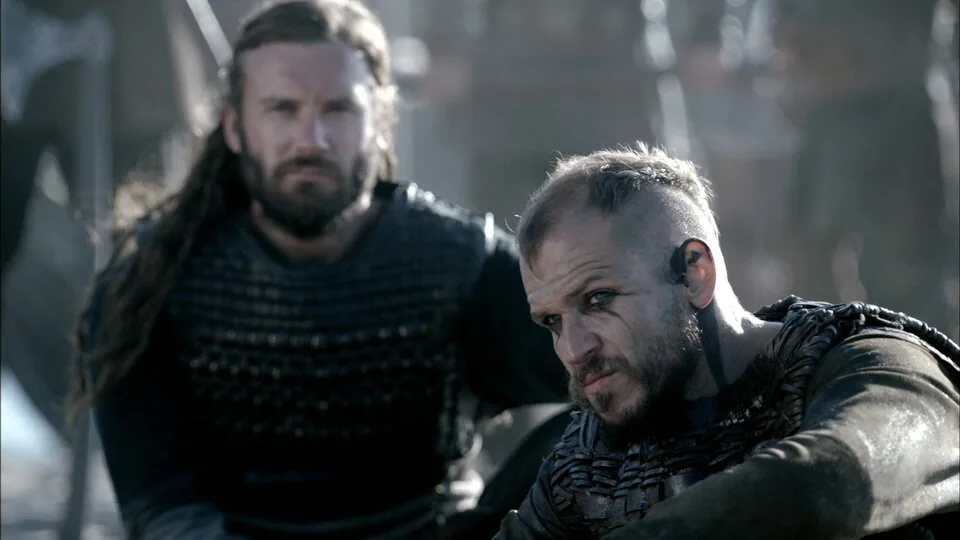
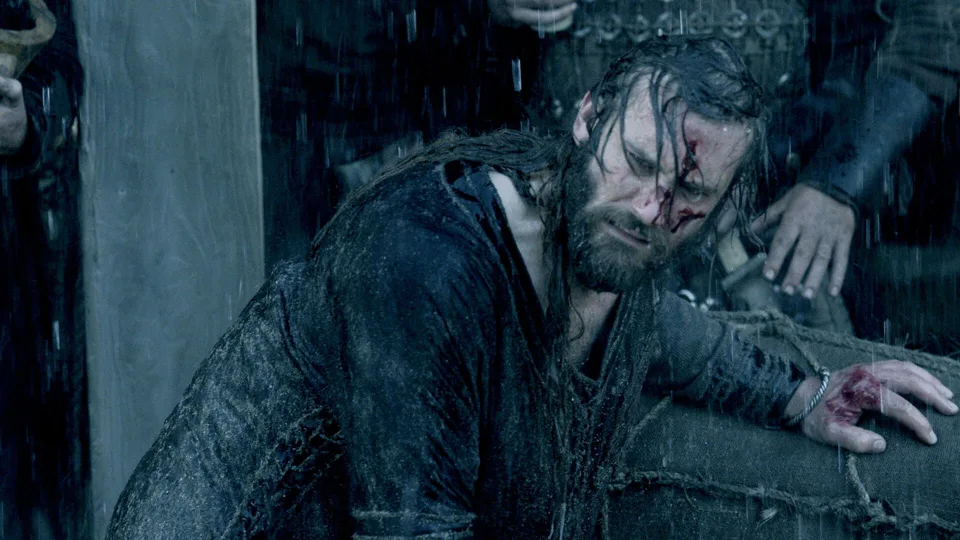
The world behind the character.
What is historical about Rollo and Paris?
Rollo belongs to the history of Normandy. The agreement associated with 911, conversion and the growth of territorial rule explain his significance. His role as Ragnar’s brother belongs to the series.
Keep the distinctionThe Paris attack of 845, the siege of 885–886 and Normandy’s foundation are distinct episodes of history. The drama brings material together.
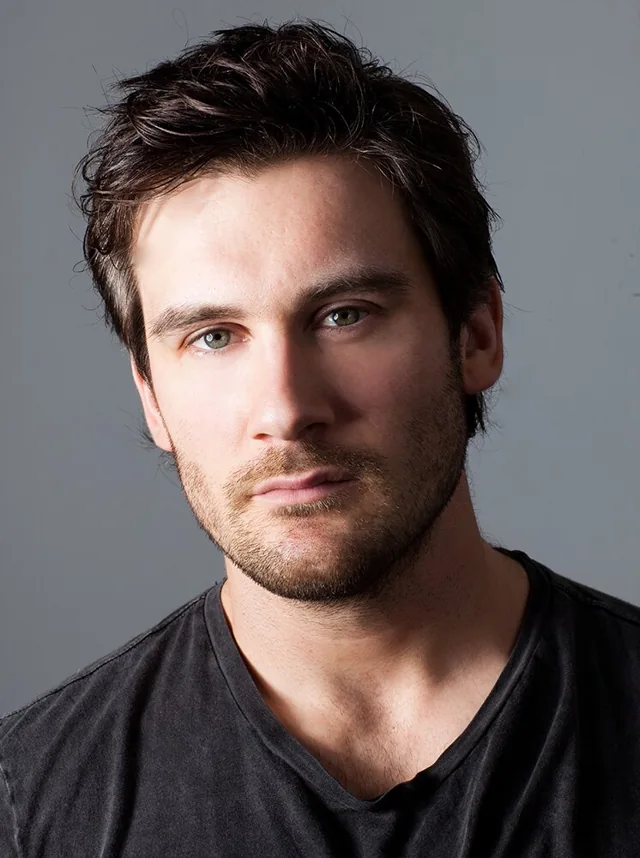
Who plays Rollo?
Clive Standen portrays Rollo.
Standen trained with the National Youth Theatre, National Youth Music Theatre and London Academy of Music and Dramatic Art. His early stunt experience included riding, jousting and swordplay.
Rollo and the historical evidence
Historical ruler; screen family relationship invented. His role in Normandy has a historical basis. The series' brotherhood with Ragnar is a dramatic connection, not an established historical genealogy. Read the ninth-century Seine raids and the settlement of 911 as distinct phases.
Compare the screen character with the sources