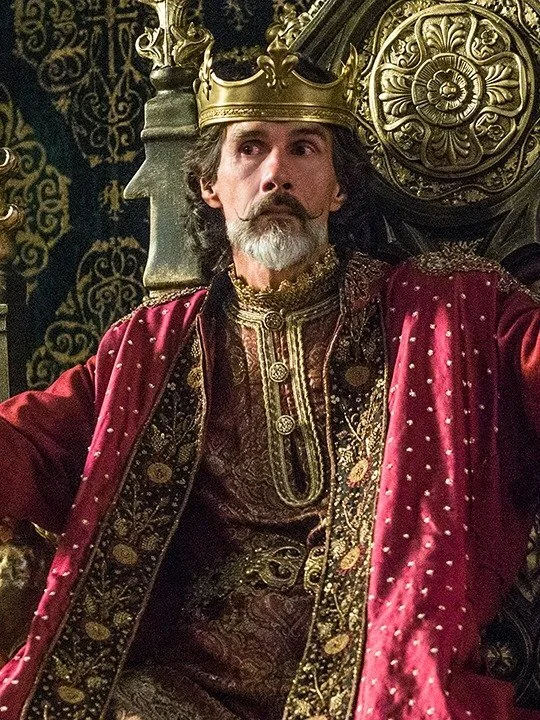
Who plays Emperor Charles in Vikings?
Emperor Charles is played by Lothaire Bluteau in the original Vikings series.
Explore family, allies and rivals or follow the story sections below.
Cast references: Lothaire Bluteau.
Explore Emperor Charles’s story
The city and the dynasty
Gisla’s role in the defense gives his daughter a public authority that differs from his own. The eventual arrangement with Rollo links the imperial household to a Viking warrior, making marriage part of the effort to create a more durable defense.
A useful outsider
As Rollo commits to Francia, Charles gains a protector whose knowledge can be used against the returning raiders. Odo’s position becomes vulnerable amid court plotting. The removal of Odo, and later Roland and Therese, reveals a ruler willing to eliminate people around the throne.
Naming the portrayal carefully
This profile follows the emperor as the series presents him. His storyline combines events and relationships that should not be used to identify every historical detail through a single ruler’s name. The official biography emphasizes his troubled character and concern with credit for the victory, rather than offering a historical chronology.
Relationships & loyalties


Memorable scenes
Odo’s enemies become useful
Season 4, episode 8
Charles authorizes Odo’s removal while Rollo’s place in the court grows stronger. The people who seem to dominate the military conversation do not retain control of the emperor’s decisions.
Why this moment matters
Odo’s importance to the defense appears to give him a durable claim on the ruler’s confidence. His removal reveals that military usefulness is not the same as control over a court’s alliances. Charles benefits from an outsider in Rollo while preventing a familiar servant from converting public service into an alternative center of authority.
A public victory follows private executions
Season 4, episode 10
As Rollo fights on the river, Charles has Roland and Therese killed. He later receives the victorious defender with Gisla. The episode juxtaposes the public image of a saved city with the court’s lethal redistribution of power.
Why this moment matters
The sequence separates the victory the city can celebrate from the removals that make it safe for Charles to claim. Rollo’s return supplies a visible defender, while the executions prevent yesterday’s useful conspirators from becoming tomorrow’s claimants on the throne. The contrast makes survival at court depend on more than having correctly identified another person’s enemies.
Why fans keep talking
Charles can become an unexpectedly engaging figure because the traits that make him unimpressive in battle do not exhaust his political abilities. The surprise depends on seeing self-preservation turn into an effective reading of rival ambitions. That does not erase the criticism of his distance from the troops during the siege. Instead, it changes the terms of the judgment: courage, command presence and strategic timing are distinct capacities. His use of Rollo and removal of courtiers invite a reassessment without requiring the earlier weakness to have been an elaborate performance from the beginning.
What resonates
Outward weakness conceals a surprising ability to understand and use rivals. Viewers who enjoy political reversals find more intelligence beneath his first impression.
What divides viewers
His distance from the troops and apparent lack of courage during the siege remain weaknesses even for viewers who appreciate his political instincts.

Who plays Emperor Charles?
Lothaire Bluteau portrays Emperor Charles.
Lothaire Bluteau’s work beyond Vikings includes Daniel Coulombe / Jesus in Jesus of Montreal (1989); Father Paul LaForgue in Black Robe (1991); The Khan in Orlando (1992); Pierre LaMontagne in The Confessional (1995); Horst in Bent (1997).